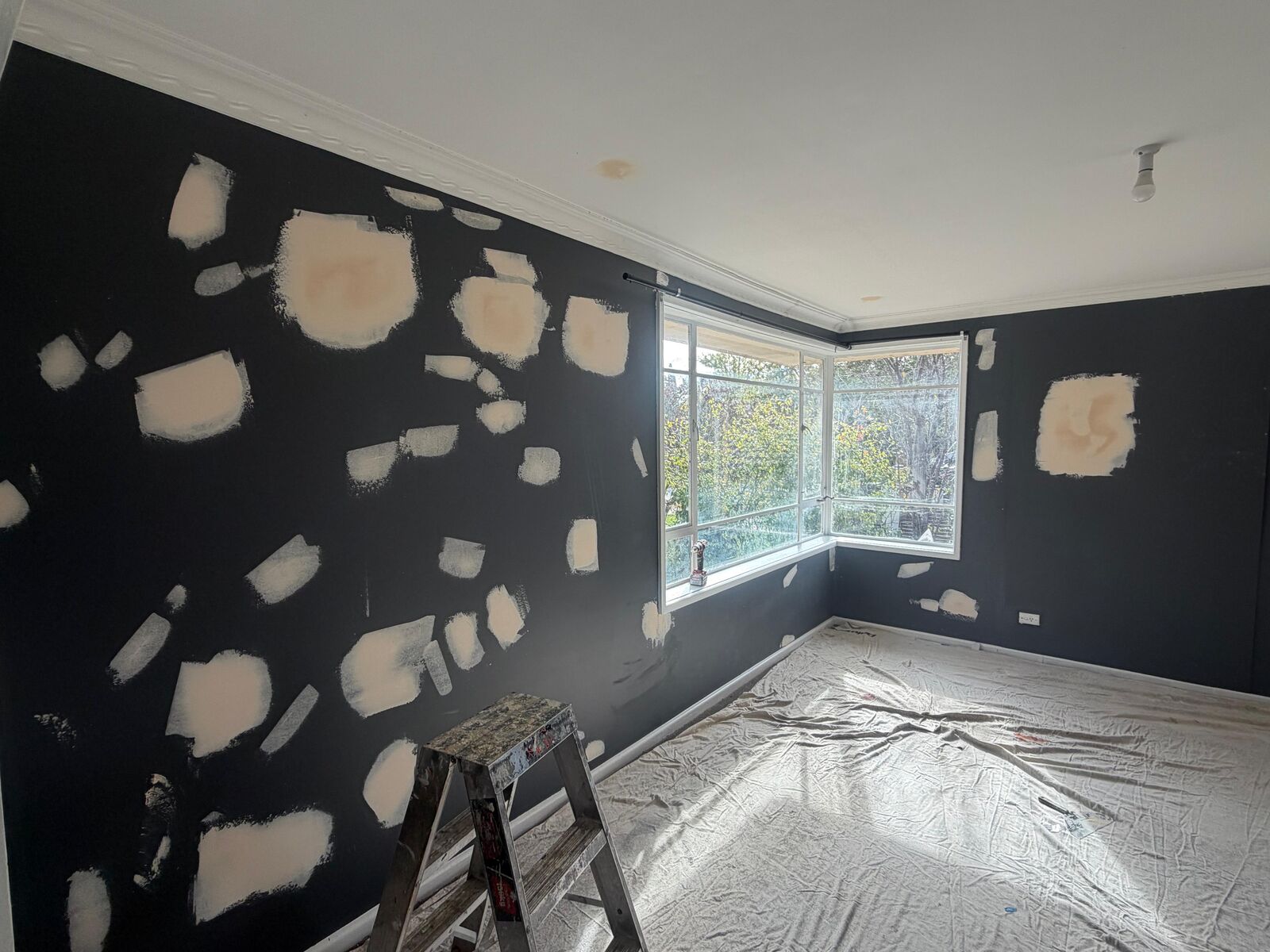
Fresh paint shows every crack and dent, so good plaster repair is the foundation of a great finish. Here is what can be repaired — and what needs replacing.
Before any room is painted, the walls and ceilings need to be sound and smooth. New paint — especially in a low-sheen or darker colour — highlights every crack, dent and patch. The good news is that most common damage to plasterboard (often called Gyprock) can be repaired as part of the preparation for painting.
Common plaster problems
- Hairline and settlement cracks, often around doors, windows and cornices
- Holes from door handles, wall plugs, picture hooks and removed fittings
- Nail and screw pops, where fixings push through the surface
- Dents and scuffs from furniture and everyday life
- Water stains on ceilings from leaks or roof problems
- Sagging ceiling sheets
What plaster repair can fix
Most cracks, small and medium holes, nail pops and dents can be repaired. Small damage is filled and sanded smooth; larger holes are patched with a backing piece or mesh, then built up with plaster compound, sanded and sealed. Done properly, the repair disappears once the wall is painted.
Do painters patch holes before painting?
Most professional painters include minor patching — filling nail holes, small dents and hairline cracks — as part of normal preparation, because paint will not hide them. Larger plaster repair, such as patching big holes, re-setting cornices or replacing damaged sheets, is often quoted as a separate item, so check what your quote includes. At Prolux Painters Canberra, surfaces are cleaned, repaired and primed before any paint goes on, and your itemised quote shows which repairs are included.
When plasterboard needs replacing
Plasterboard that has been soaked by water, has crumbled or is sagging usually needs to be replaced rather than patched. A sagging ceiling should be checked promptly, as it can be a sign of failed fixings or water damage, and may be a safety issue.
Water stains: fix the cause first
A ceiling stain will come back if the leak is still there. Find and fix the source — roof, plumbing, shower or air-conditioning — and let the area dry completely. Then seal the stain with a stain-blocking primer before painting, or it can bleed through the new paint.
Why do cracks keep coming back?
Some cracks reappear because the house moves with seasonal changes in temperature and soil moisture. Flexible fillers and sealants at joints and cornices help, but recurring or widening cracks — especially diagonal cracks from the corners of doors and windows — are worth having checked by a building professional before cosmetic repairs.
A word on older homes
Some older homes, particularly those built before 1990, can contain asbestos in wall or ceiling sheeting and textured ceilings. Do not sand, drill or cut materials you are unsure about — have them tested first.
How long after plastering can you paint?
Plaster compound must be completely dry before it is sanded and painted. Drying time depends on the product, how thick it is and the weather — cold Canberra winters slow it down. Repaired areas should then be sealed or primed so the topcoat dries evenly without showing patches.
Prolux Painters Canberra repairs cracks, holes and damaged plaster as part of our interior painting and renovation work. Contact us for a free quote.
Frequently Asked Questions
Do painters patch holes before painting?
Usually, yes. Filling nail holes, small dents and hairline cracks is part of normal preparation. Larger plaster repair, such as big holes or damaged sheets, is often quoted separately, so check what your quote includes.
Can plaster be repaired?
Yes. Cracks, holes, dents and nail pops in plasterboard can usually be filled or patched, sanded and sealed so they disappear once painted. Water-damaged or sagging sheets usually need replacing.
Can a plaster ceiling be repaired?
Cracks, small holes and stains can be repaired. Fix any leak first and seal stains with a stain-blocking primer. Sagging or water-damaged ceiling sheets should be checked and usually replaced.
How long after plastering can you paint?
Once the plaster compound is completely dry and has been sanded and sealed. Drying time depends on the product, thickness and weather — follow the product instructions.
Can you paint over plaster patches?
Yes, once the patch is completely dry, sanded smooth and sealed with a primer. Without primer, patches can show through the paint as dull or shiny spots.
What do painters use to fill nail holes?
Usually a filler or plaster compound for walls and ceilings, timber filler for woodwork, and a flexible, paintable gap sealant for joints where walls meet trims and cornices.

Local painters with 12+ years of experience painting homes and businesses across Canberra and the surrounding region.
About usReady to transform your space?
Get a free, no-obligation quote from Canberra's trusted painters.